
Teaching for mastery CPD · the CPA approach
Singapore maths training for teachers, built around the CPA sequence.
Our Singapore maths and teaching for mastery CPD is a whole-staff day in your school on concrete, pictorial and abstract (CPA) — what each stage is actually for, when a child is ready to leave it, and why the middle one is the stage that gets skipped. Mastery isn't a scheme; it's the order you teach a concept in.
All three stages taught as one sequence, not three topics
EYFS to Year 6 in a day, in your building
Scheme-agnostic: we do not replace your scheme, we make your teachers brilliant at it
Whole staff, one invoice, no supply cover
Whole-school mastery day
1,299
a daywhole school
Not per teacher, not per key stage.One day, one invoice.
- ✓The whole-school membership, free for the year — worth £399
- ✓The animated pack and worksheets for every year group
- ✓All recorded INSETs, for anyone who misses the day
- ✓The EYFS Ten Frames Course online, for the whole team
Travel included for mainland UK.
Schools and organisations we’ve supported























Concrete · pictorial · abstract
The CPA approach: two stages are done wellin most schools.
The CPA approach teaches every concept in three stages, concrete then pictorial then abstract, and in most schools the middle one is the weak link. Manipulatives in Reception and a written method by Year 5 are not the hard part. The stage in between is the one that decides whether a child can start an unfamiliar problem.That is what this day is about.
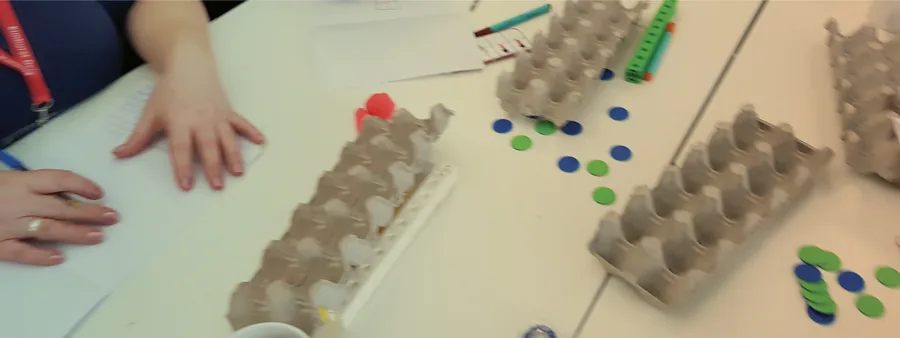
Stage one
Concrete
Manipulatives a child can pick up and move: cubes, counters, ten frames, the real thing on the table in front of them.
- Usually the strongest stage in a primary school
- The risk is staying in it too long
- On the day: when an object stops teaching and starts entertaining
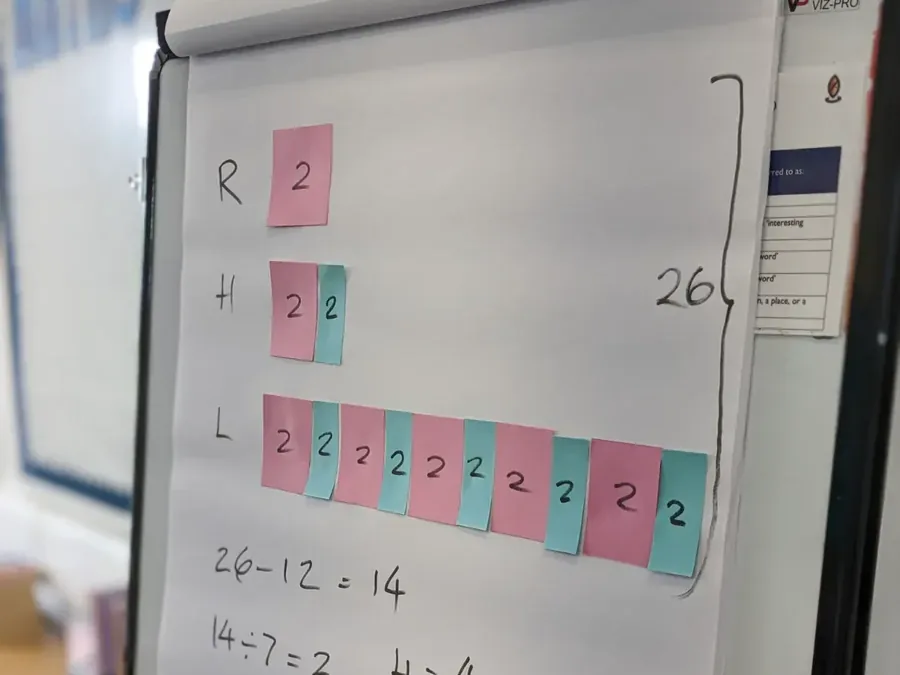
Stage two — the one that gets skipped
Pictorial
The drawing that keeps the structure of the problem once the objects are back in the tray. Not an illustration — a diagram that can be reasoned with.
- Where most schemes move fastest, and children lose the thread
- This is the stage the bar model belongs to
- On the day: drawing the problem before choosing an operation
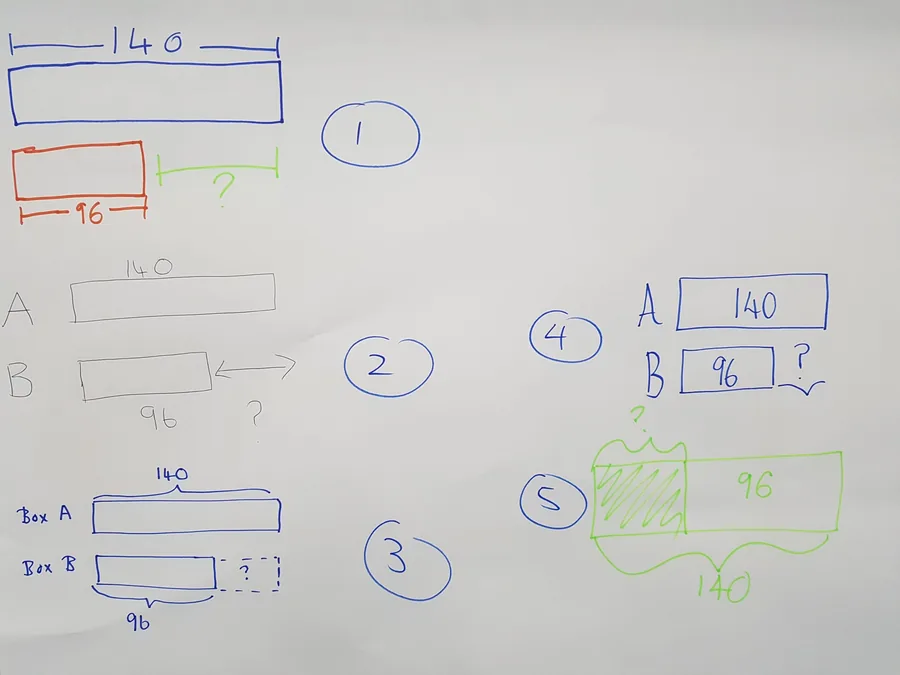
Stage three
Abstract
The number sentence, the written method, the symbol. Quick, portable, and hollow if the child got here by memorising rather than by understanding.
- Also usually strong — it is what tests ask for
- The risk is arriving by rote and no one noticing
- On the day: telling fluency from recall in a book scrutiny
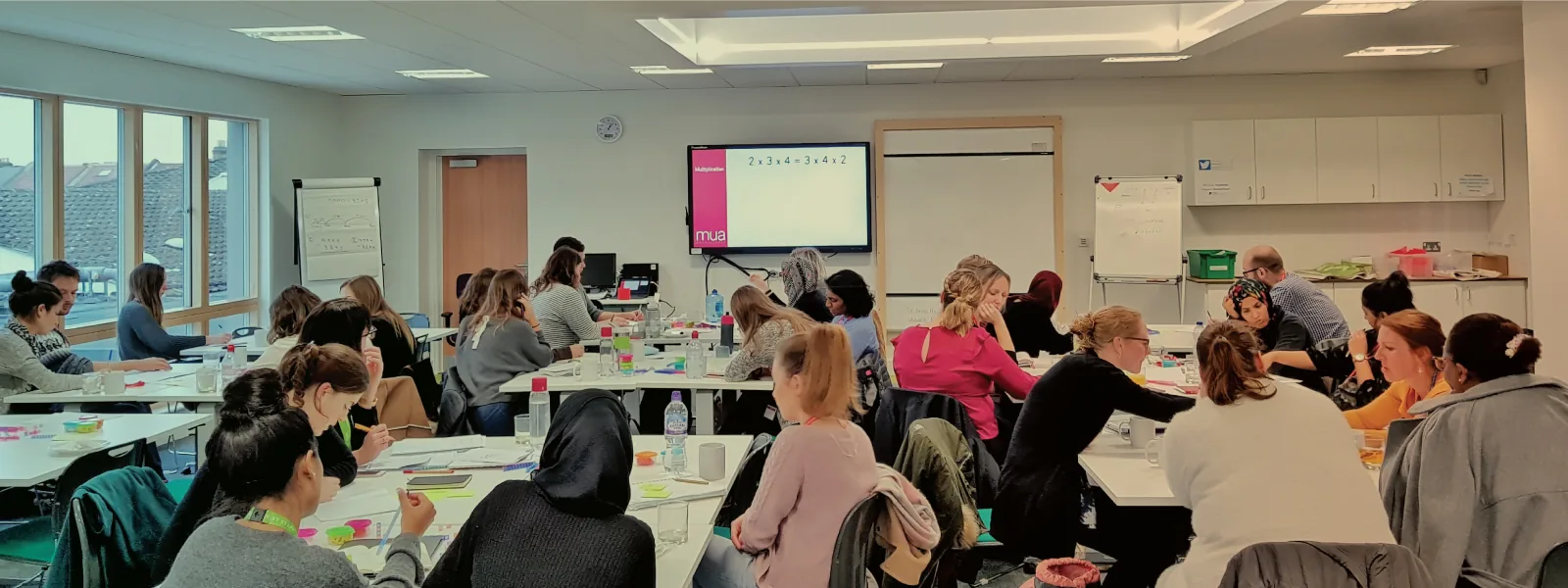
What the day looks like
One concept, taken all the waythrough the sequence.
The day takes your whole staff through one topic, from manipulatives to written method, and shows where it would normally break — rather than three separate sessions on three stages.You choose the topic.
Before
A twenty-minute call
We pick the concept the day runs on — usually the one that keeps coming back in book scrutiny.No two days run the same.
Morning
The same idea, three ways
Whole staff together, one concept shown concretely, pictorially and abstractly — and the questions that move a child from one to the next.
Mid-morning
Split by phase
EYFS and KS1 work on concrete into pictorial; KS2 on pictorial into abstract. Same sequence, different end of it.
Afternoon
In your classrooms, with your children
Modelled live rather than described. Staff watch the questioning, then take a group themselves while there is still someone in the room to ask.
Late
Maths lead session
How to spot a class that is stuck in one stage, what that looks like in books, and what to put in the staff meeting after this one.
After
The library goes live
Every teacher on your staff list gets the membership that afternoon.The day is where it starts, not where it ends.
Timings are indicative — the shape of the day is agreed on the call beforehand.
Two days, one method
Which of the twodoes your school need?
Choose the mastery day for the whole CPA sequence, or the bar model day to go deep on the pictorial stage. They are not alternatives so much as different widths.
This page
Maths mastery — the whole sequence
Start here when teaching is inconsistent between year groups, when the scheme is being followed without being understood, or when nobody can quite say what mastery means in your building.
- All three stages, one concept end to end
- Aimed at a whole staff at mixed starting points
- Leaves you with a shared language for the sequence
The other day
Bar model — the pictorial stage in depth
Start here when the sequence is already understood and the drawing is the weak link, or when you want one shared representation used the same way from Reception to Year 6.
- One stage, taken much further
- EYFS, KS1 and KS2 strands run separately
- Leaves you with a method on the page, not a principle
What schools said afterwards
122 feedback forms.Filled in at the end of the day.
Teachers filled in 122 paper feedback forms at the end of our in-school training days, from 7 December 2016 to 15 November 2017. Most come from a year-long contract with 13 Leicester primary schools; 56 forms give no school. Nothing here was solicited and nothing was chased.
122
in-school feedback forms, 2016–17
84%
rated the overall quality Excellent (102 of 122)
96%
said it met expectations (44 of 46 who answered)
Book a mastery dayfor your whole staff.
Tell us the concept that keeps coming back in book scrutiny and the year groups you are worried about. The rest is a date.
£1,299 for the day, whole staff, travel included for mainland UK — and the whole-school membership free for the year.